Ultrasound applications
The production of biogas as a renewable energy source is currently of great importance, which is why the number of agricultural biogas plants that ferment organic substrates (renewable raw materials, slurry, etc.) is steadily increasing.
Ultrasound plays a key role in overcoming the limitations of fermentation.
Although fermenters in agricultural biogas plants are designed for longer retention times, the rate-limiting hydrolysis step must still be overcome here as well. To this end, the treatment of the active bacterial biomass from the fermenter or secondary digester with ultrasound has proven effective. This results in intensified anaerobic digestion with increased biogas production and, in most cases, a higher methane content.
Technical limitations of fermentation and how to overcome them using ultrasound
The anaerobic fermentation of organic substrate (biomass) is a well-established technology.
The biomass is disintegrated by bacteria in the fermenter at temperatures of around 37°C.
This process produces biogas as a metabolic by-product, the main component and actual energy source of which is methane.
However, the anaerobic biological degradation process proceeds very slowly due to the solid biomass, which is difficult for bacteria to dissolve.
The first step in the disintegration process is so-called hydrolysis, which reduces the particle or molecular size and thus determines the speed of the entire disintegration process.
This is where the effect of our ultrasound comes into play during hydrolysis. The ultrasonications affect both the structure of the substrates (cell disruption) and the active microorganisms (stimulation through acoustic pressure fluctuations and cavitation, prevention of agglomeration, release of enzymes).
Biological hydrolysis is thus supported or entirely replaced by the use of ultrasonic systems, resulting in accelerated and enhanced degradation.
Improving fermentation through the use of ultrasound
Ultrasound intensifies fermentation in biogas plants.
The fermenting microorganisms produce the enzymes (exoenzymes) necessary for the disintegration of organic matter.
When using our high-performance ultrasound, even a low energy input leads to an increased release of these enzymes,
thereby boosting the activity of the microorganisms.
Sonication also consistently increases the interface between the liquid and solid phases (particles and flocs are broken down),
which facilitates enzymatic action.
Further energy input also breaks down the walls of plant and bacterial cells, leading to the release of organic, dissolved cellular components that are highly susceptible to fermentation. Ultimately, this results in an intensified digestion process with further breakdown of organic substrates and increased biogas production.
With the same biomass feedstock, the use of ultrasound allows for increased biogas production on the one hand and on the other hand, enables a reduction in feedstock volume while maintaining biogas production levels.
Furthermore, the quality of the biogas improves through an increase in methane content.
Due to the difficult-to-degrade agricultural biomass, the methane content in conventional biogas plants is sometimes below 50%.
Additionally, sonication of the incoming flow reduces the viscosity of the fermenter contents, making them more fluid.
This reduces the power consumption of agitators and pumps and, consequently, the electricity demand of the biogas plant.
Design and easy integration
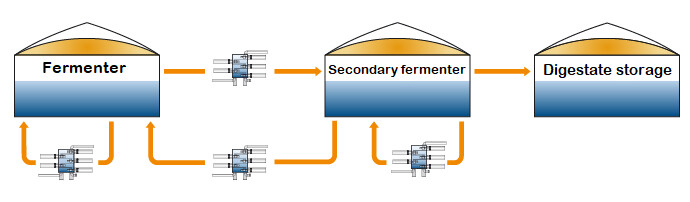
It is usually enough to treat a partial volume of the fermenter or secondary fermenter contents with ultrasound and return it to the fermentation process.
This flow rate typically corresponds to 30 to 50% of the daily substrate feed.
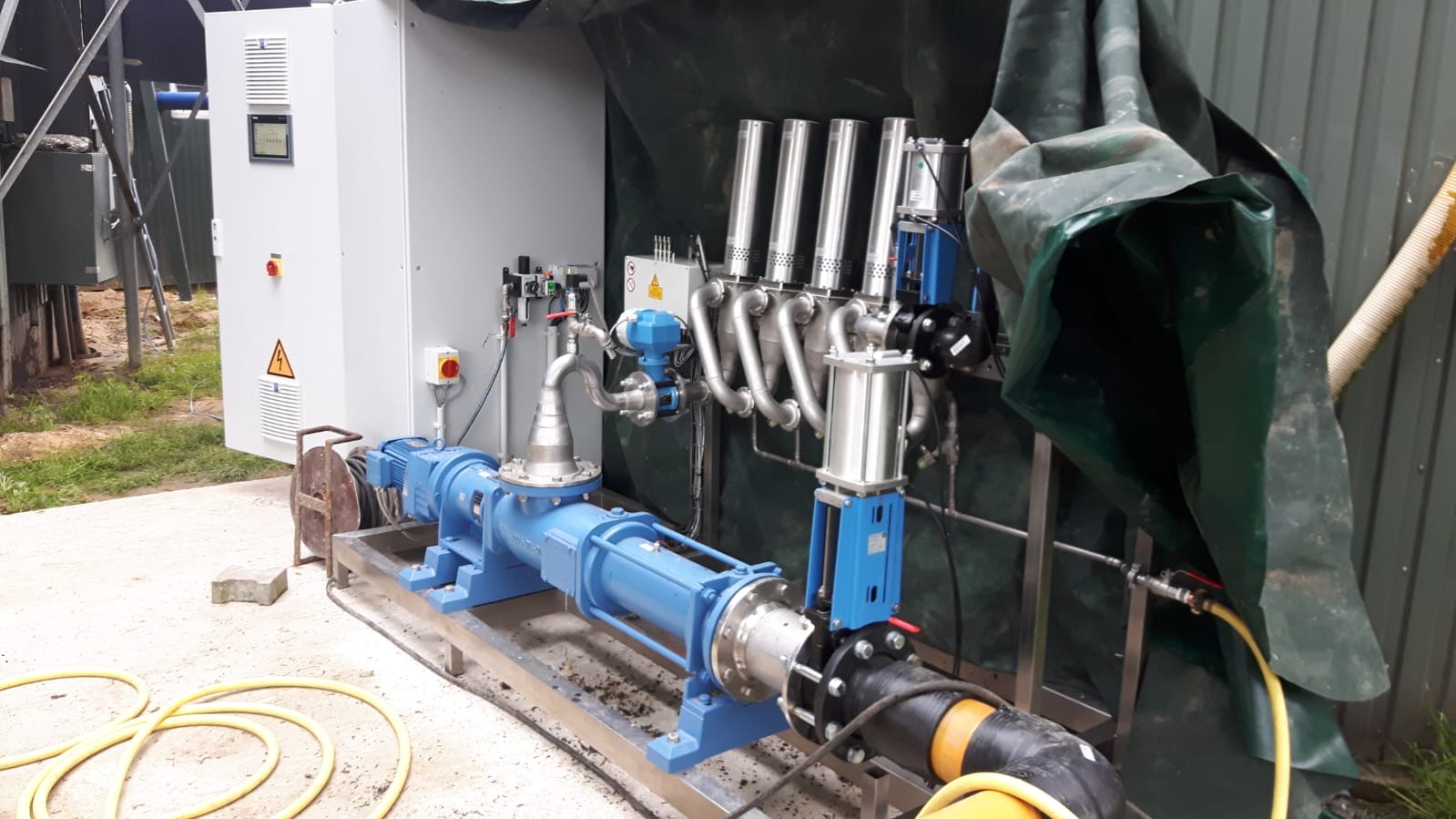
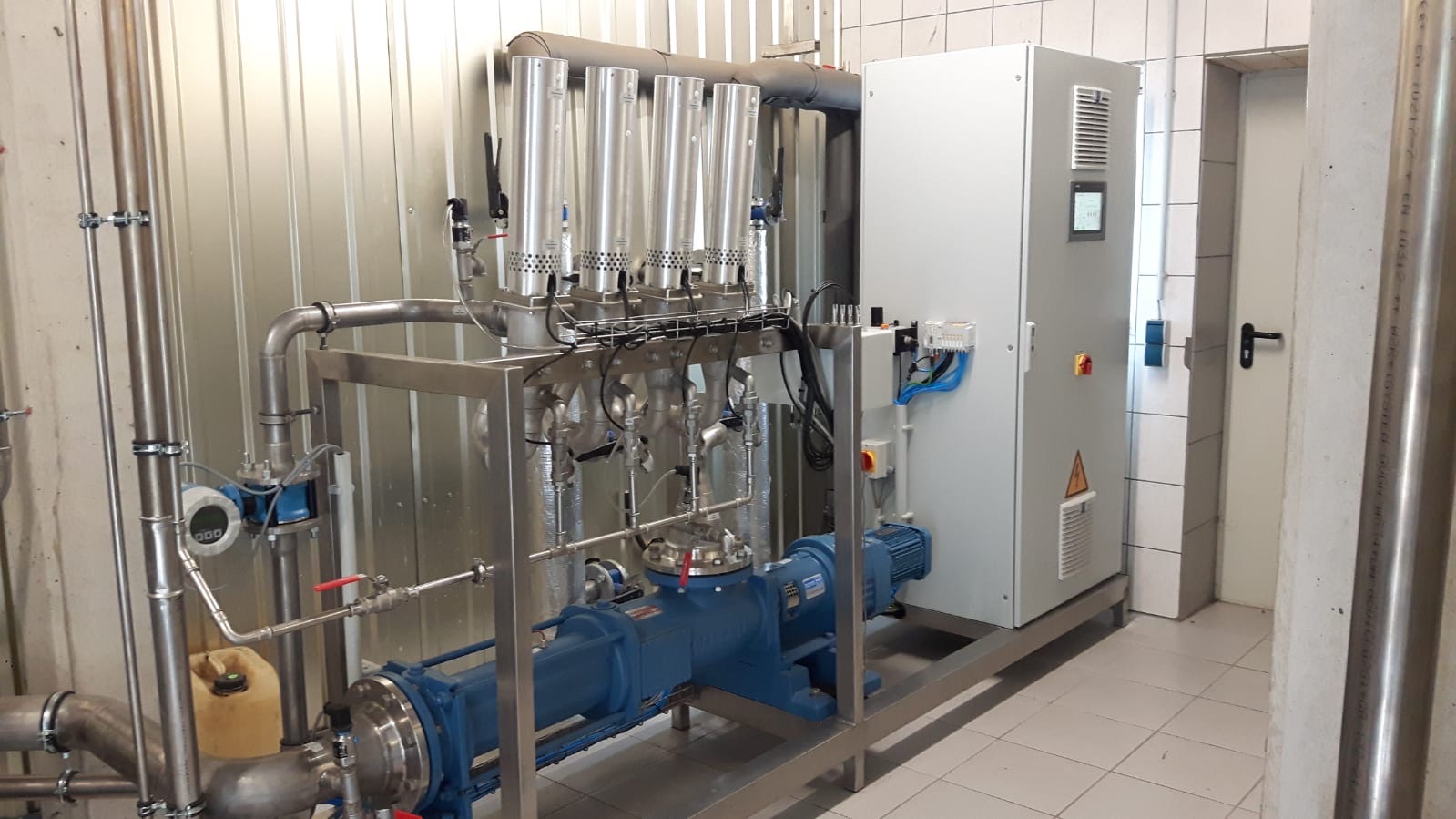
The standard ultrasonic system (connected load 5 kW) is very compact with a footprint of 1.45 m x 0.25 m and
therefore requires very little space. On-site, only inlet and outlet connections as well as a power and water supply are required.
The ultrasonic systems themselves are generally in operation 24 hours a day.




![Ultraschall_System_3_Reaktoren[1].jpg](/mt-content/uploads/2021/06/ultraschall_system_3_reaktoren1.jpg)